

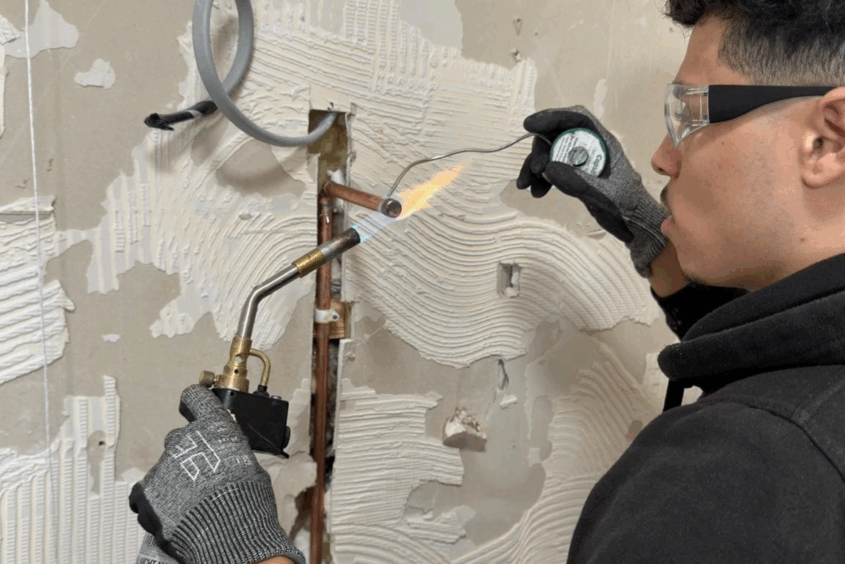
Faulty gas appliances and pipework can lead to carbon monoxide poisoning, gas leaks, and fires. By working together, we can make sure the gas systems in your home are safe and working properly.
What we do:
- Annual gas safety checks are carried out in all homes with a gas supply
- All gas appliances are installed or serviced by a gas safe registered engineer
- We encourage you to report faults or breakdowns straightaway
What you can do:
- Let us in your home to carry out your annual gas safety check, it’s a legal requirement and helps keep you, your household and neighbours safe. If you can’t make your appointment, let us know as soon as possible so we can reschedule and keep your certificate valid. If you repeatedly miss a gas safety check appointment, we may take legal action and pass on the costs of enforcement
- Report any issues with your gas appliances straightaway, don’t wait for your next appointment
- Never attempt to repair or install gas appliances yourself, always use a Gas Safe registered engineer
- Know where your gas meter is and how to turn it off in an emergency
- Keep vents and air bricks clear to ensure proper ventilation
- Be alert for signs of a gas problem or a gas leak
Gas leaks
If you suspect a gas leak:
- Call the National Gas Emergency Helpline on 0800 111 999 immediately
- Open your doors and windows and turn the gas off at the meter (unless it’s in a cellar/ basement)
- Do not use naked flames or electrical switches, including light switches
Carbon monoxide
Carbon monoxide is sometimes called the “silent killer” because you can’t see it, smell it, or taste it. It’s a poisonous gas that can build up if appliances aren’t working properly, or if a room isn’t well ventilated. The good news is that by knowing the warning signs and ensuring your carbon monoxide alarm is working, you can keep yourself and your family safe.
Breathing in carbon monoxide can make you feel unwell very quickly. The symptoms can easily be mistaken for something else, like the flu or food poisoning. Common signs include:
- Headaches
- Dizziness
- Breathlessness
- Nausea
- Collapse
- Loss of consciousness
If you feel better when you go outside into fresh air, that can be a strong warning sign of carbon monoxide poisoning.
As well as health symptoms, there are also signs to look out for around your home that could mean there’s a carbon monoxide leak:
- Lazy yellow/orange flames instead of crisp blue ones
- Black marks or soot on or around the appliances
- Boiler pilot lights that keep going out
- Too much condensation
- Error codes on control panels
It’s important to act quickly:
- Open all doors and windows to let air flow through your home
- Don’t touch light switches or electrical appliances
- Don’t light matches or start a fire
- Go outside and get fresh air straight away
- Call the National Gas Emergency Service on 0800 111 999
- If you or anyone else feels unwell, go to your GP or the nearest hospital. Make sure to tell the medical staff that you may have been exposed to carbon monoxide.
What we do:
- Each year we check your carbon monoxide alarms. If we find any issues, we will replace the alarm straight away.
What you can do:
Carbon monoxide is dangerous, but the good news is that it’s also preventable. By knowing the signs of a leak, testing your alarm regularly, and acting quickly if you ever suspect a problem, you can keep your home and family safe. A few simple checks and precautions can make all the difference.
Your carbon monoxide detector is the best way to protect yourself – it will warn you if there’s a problem before you even notice any symptoms. Never treat a carbon monoxide alarm activation as a false alarm. Just because you can’t see carbon monoxide, smell it or taste it, it doesn’t mean it’s not there, the alarm is going off for a reason.
- Alarms are usually fitted high up on the wall, close to your boiler or gas appliance
- Test your alarm once a month by pressing and holding the test button
- A working alarm will make a loud sound that you can hear clearly
Some alarms run off batteries, while others are connected to the mains with a battery backup. If your carbon monoxide detector is battery powered, make sure you replace the batteries regularly. Always follow the instructions you were given to know how to care for your alarm. Keep the alarm clean and free of dust.
If your carbon monoxide detector has a working power supply (either batteries or mains) and does not sound an alarm when the test button is pressed, contact us immediately:
With carbon monoxide alarms, people will often hear an alarm, but because they don’t see a fire, they assume it’s a nuisance alarm and remove the alarm from its baseplate to disconnect it. We’ve seen this ourselves through the data. If the alarm is going off, the chances are carbon monoxide is present and you need to act.
Building safety service standards
Our commitment to ensuring that the homes we provide are safe, secure, and compliant with all relevant health and safety laws.
File Type: pdf
File Size: 609 KB
Last Updated: July 2026